
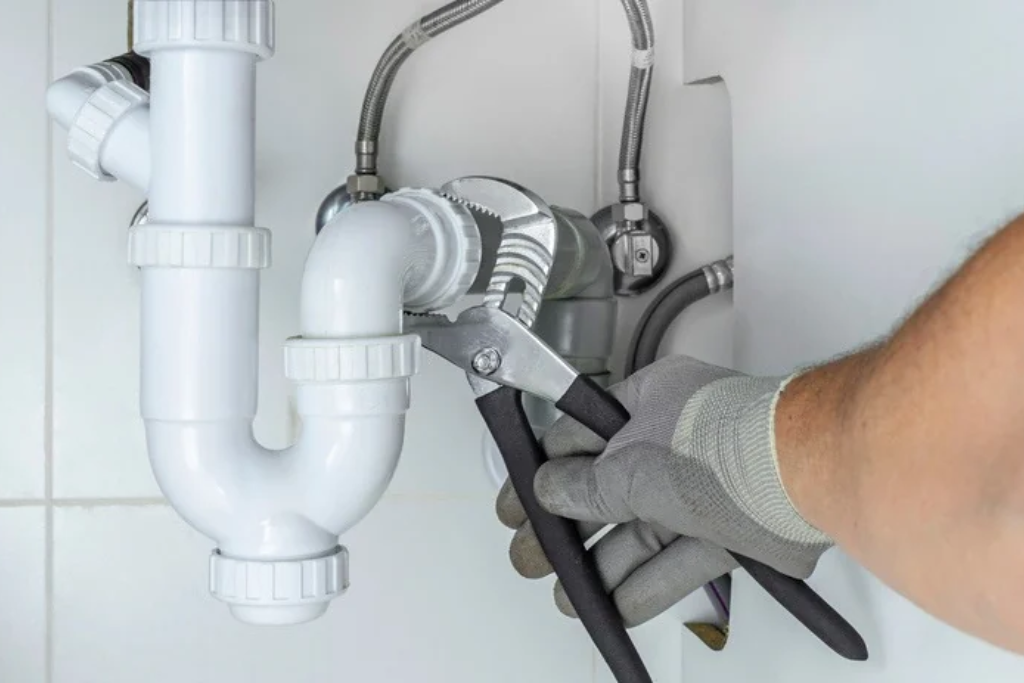
For a clogged drain deep in your pipe, , start by running very hot water down the drain in stages, then try a baking soda and vinegar flush. If that doesn’t work, a hand-cranked drain snake can reach fifteen to twenty five feet and clear most fixture clogs. When several drains are slow at once, water backs up in odd places, or the clog returns within days, the blockage is likely sitting in your main sewer line and needs a plumber with camera inspection and hydro jetting equipment.
That progression matters because most people only ever meet a clog right at the drain opening. A hairball in the shower drain, a wad of food scraps in the kitchen sink. You fish it out and move on. A deep clog is different. It can sit far down the pipe, past the trap, sometimes past the point where your home’s plumbing meets the main line. You cannot see it or reach it with your fingers or a bent wire coat hanger. And it tends to come back no matter how many times you clear the surface. Knowing which one you have changes everything about how you fix it.
How Do You Know If a Clog Is Deep in the Pipe?
The location of a clog often leaves clues. Pay attention to how your drains are behaving and whether the problem is isolated to one fixture or affecting your entire plumbing system.
A surface clog usually affects one drain. One drain is slow, the rest of the house is fine, and clearing that one drain usually fixes it. A deep clog spreads. It affects several fixtures at once, or it keeps coming back within days of being cleared.
Here are the signs that point deeper down the line:
- Multiple slow drains at the same time: If your bathroom sink, tub, and kitchen sink are all sluggish, the blockage is likely in a shared section of pipe rather than any one fixture.
- Gurgling sounds: Air trapped behind a clog escapes in bubbles. You might hear it in the toilet when the washing machine drains, or in a sink when you flush.
- Water showing up where it shouldn’t: Flush the toilet and the shower fills with water. Run the sink and the floor drain backs up. That crossover means the water has nowhere to go but sideways.
- Bad smells: Trapped organic matter starts to break down. Unpleasant odors drifting up from a drain often mean waste is sitting somewhere it shouldn’t.
- A clog that returns: You snake it, it clears, and a week later it is slow again. Recurring clogs are one of the clearest signals that something deeper is still there.
One of these on its own might be nothing. Two or three together, and you are likely dealing with a deep clog.
What Causes Clogs Deep in Pipes?
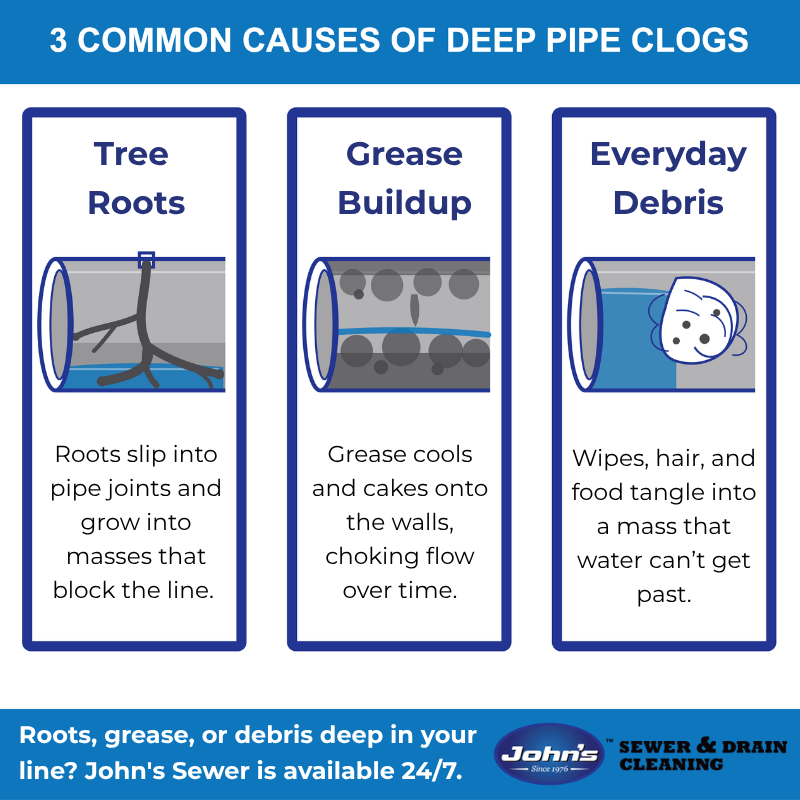
Deep clogs often develop over time before causing a noticeable problem. In many cases, the blockage starts with small amounts of buildup that collect inside your pipes until water can no longer flow properly. A few common causes appear again and again.
Grease Buildup
Grease is one of the most common causes of deep kitchen drain clogs. It may go down the drain as a liquid, but it cools and sticks to the inside of your pipes. Over time, layers of grease can trap food particles, coffee grounds, and other debris, slowly reducing the space available for water to flow.
Tree Roots
If you own a home with mature trees nearby, tree roots can become a major plumbing concern. Underground pipes carry warm, nutrient rich water, and roots grow straight toward it. They can slip through tiny cracks and loose joints, then expand inside the pipe. Roots can cause more than 50% of all sewer blockages, making them the leading cause of deep clogs in the main line.
Everyday Debris That Doesn’t Break Down
Many items that enter your drains are difficult for pipes to handle. Over time, these materials can collect and contribute to deeper clogs.
| What goes down | Where it collects | Why it clogs |
| Hygiene products and wipes | Toilet and main line | Do not dissolve, snag on any rough spot |
| Hair and soap scum | Shower drain and bathroom sink | Binds into dense mats |
| Coffee grounds and food particles | Kitchen sink | Clump together and settle |
| Mineral deposits | Anywhere, worse in hard water areas | Narrow the pipe over months and years |
Older homes face a double hit here. Aging pipes have rougher interior walls and more joints, which gives debris and roots more places to catch and hold. For older pipes, a routine video inspection every few years can catch root growth before it becomes a clog.
Can You Fix a Deep Clog Yourself?
Sometimes. It depends on how deep the blockage is and what is causing it. Start with the gentlest method and work up. Be careful to avoid causing further damage.
Start With Hot Water and Baking Soda
For a minor clog that is more about grease than a solid blockage, hot water can loosen things on its own. Pour a kettle of hot water down the drain in stages. For a bit more punch, send down half a cup of baking soda, follow it with vinegar, wait fifteen minutes, then flush with more hot water. The chemical reaction fizzes and can break up soft organic matter near the surface. It will not touch tree roots or a fully packed pipe, so treat it as a first try, not a cure.
Reach for a Drain Snake
A drain snake, also called a plumbing snake, is a good tool for a clog you cannot reach by hand. You feed the cable into the drain until it hits the blockage, then crank to either break through it or hook it and pull it out. A hand snake can reach fifteen to twenty five feet, which covers most fixture clogs. For a true deep clog in the main line, that reach falls short.
Pro tip. A wire coat hanger is not a drain snake. People reach for one because it is handy, but it is too short, too flimsy, and it can scratch the pipe or push the clog deeper. Skip it.
Be Cautious Using Chemical Drain Cleaner
Chemical drain cleaners may seem like a quick solution, but they are not always the right choice for a deep clog. They may help with some minor surface blockages, but they often cannot reach or fully clear buildup deeper inside the pipe.
The problem is that when a chemical cleaner does not remove the clog, the product can remain trapped in the drain line. This creates additional concerns if the blockage requires professional equipment to remove, since the chemicals can still be present when the line is serviced.
If you have already tried a chemical drain cleaner and the drain is still slow or blocked, avoid adding more. Repeated use is unlikely to solve a deeper issue and may make professional drain cleaning more difficult.
When Should You Call a Professional Plumber?
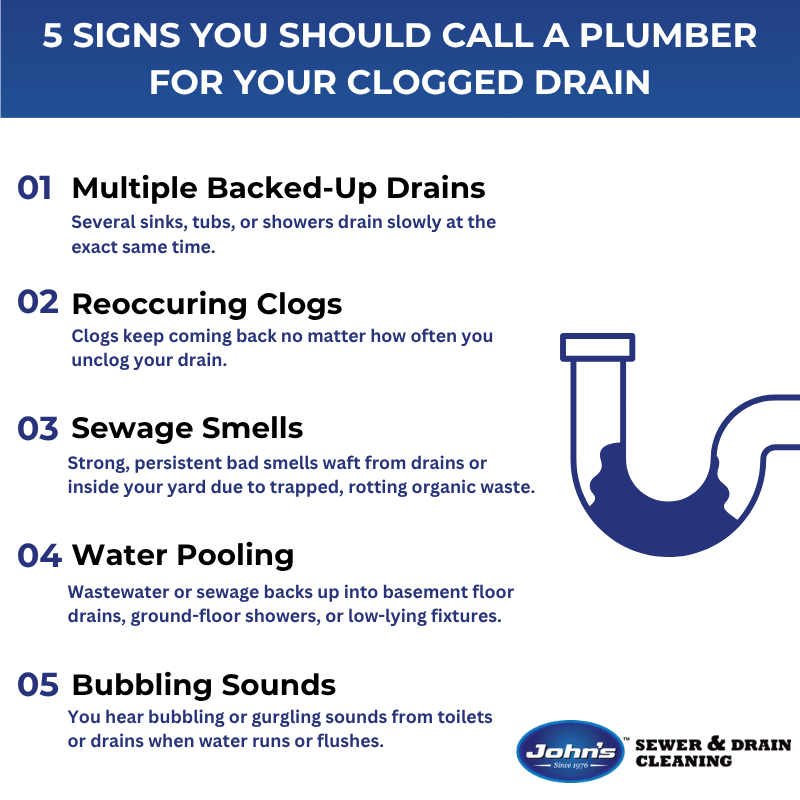
There is a point where at-home methods stop being worth it, and it tends to cost more than the repair would have. Call a pro when you see any of these:
- More than one drain backing up at the same time
- A clog that keeps returning after you clear it
- Sewage smells inside or outside the house
- Water pooling around a floor drain or in the yard
- Any sign that points to the main sewer line rather than a single fixture
Professionals bring tools that reach where a hand snake cannot.
Video inspection sends a small camera down the drain pipe so the technician can see exactly what is happening and where. No guessing. This alone often saves money, because it aims the repair at the real problem instead of the general area.
Hydro jetting clears the line with high-pressure water. It blasts through grease buildup, cuts roots, and scours mineral deposits and debris off the pipe walls in a way that a snake simply cannot match. A snake punches a hole through a clog, while hydro jetting cleans the whole pipe.
How Do You Keep Deep Clogs From Coming Back?
Prevention is cheaper than repair, and most of it is a simple habit.
Keep grease out of the kitchen sink. Pour it into a can, let it cool, and throw it away. This one change prevents more deep clogs than any other.
A few more worth building into your routine:
- Use drain strainers on every sink and tub to catch hair, food particles, and debris before they get into the pipe.
- Flush only toilet paper. Wipes, hygiene products, and paper towels belong in the trash, even the ones labeled flushable.
- Run hot water down the kitchen drain after washing dishes to keep grease moving instead of settling.
- Plant trees and large shrubs well away from where your sewer line runs. If you already have mature trees near the line, a routine camera inspection every few years catches root intrusion while it is still small.
None of these take much effort, but together they keep water moving and spare you the cost of a deep clog. The older your plumbing, the more these small habits pay off.
Call John’s Sewer and Drain Cleaning for Deep Clogs
If you have cleared the same drain more than once, or more than one drain is acting up, the problem is deeper than a quick fix. John’s Sewer and Drain Cleaning has been solving complex drain and sewer problems in the Boston area since 1976, with technicians who average 10 to 15 years of experience and a goal of reaching your home within two hours of your call. Someone is always available, any hour, any day.
Schedule an appointment or call us today and get the line cleared right the first time.