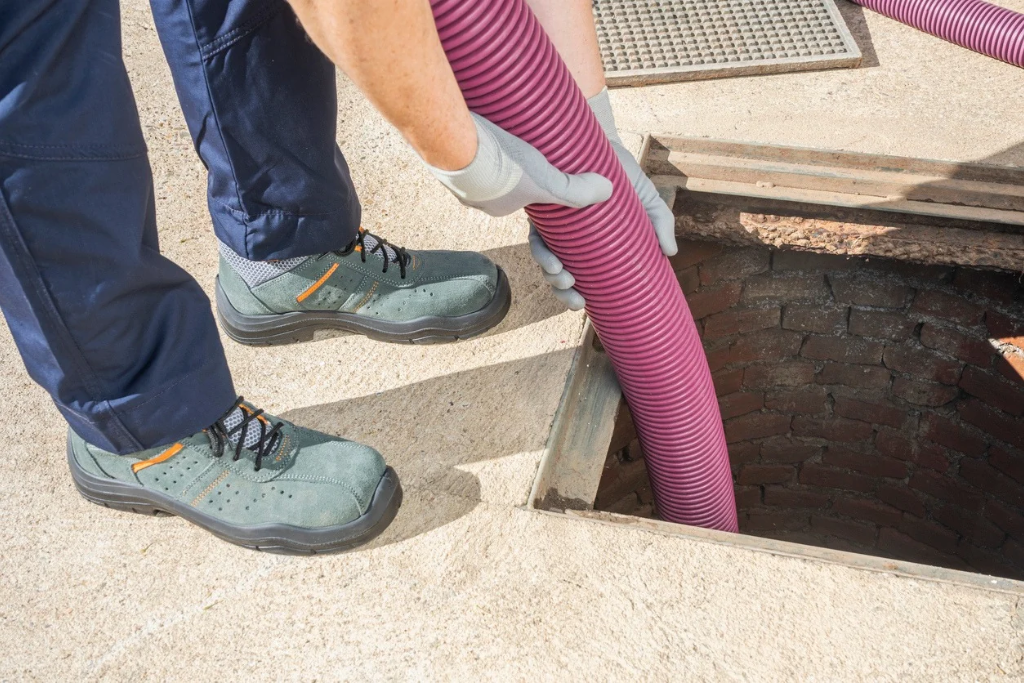
A sewer cleanout is a capped pipe that gives direct access to your main sewer line. It usually sits outside near the foundation, in the yard, or in the basement. When a clog or sewer problem develops, a licensed plumber can remove the cap and send a cable or camera straight into the line, with no need to remove a toilet or dig up the yard.
Most property owners never think about a sewer cleanout until a basement floor drain starts backing up or multiple fixtures stop draining properly. Knowing where the cleanout is located and keeping it accessible can help plumbers diagnose problems faster, simplify maintenance, and potentially reduce service costs.
What Is a Sewer Cleanout?
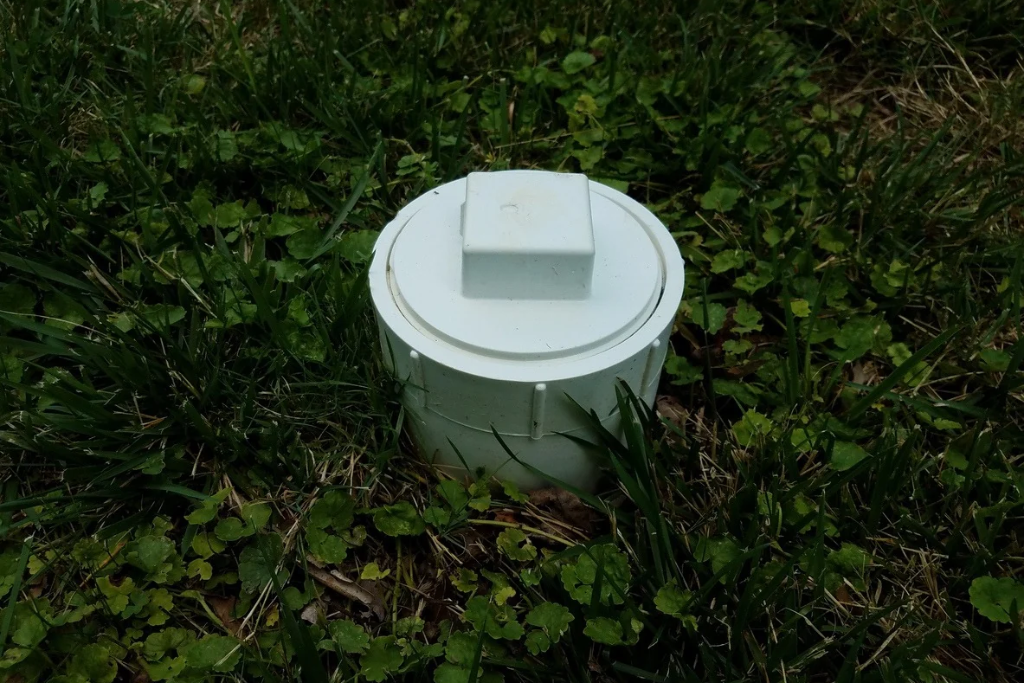
A sewer cleanout is a short vertical pipe that connects to the main line carrying wastewater out of your home or building. It has a removable sewer cleanout cap, also called a sewer cleanout plug, that seals the opening when it is not being used. Removing the cap allows a plumber to access the drainage system for cleaning, inspection, or maintenance.
Residential cleanouts are commonly connected to main sewer lines that are 4 inches in diameter. Outdoor cleanouts may appear as short white or black plastic pipes extending a few inches above the ground. Others sit flush with the lawn or are housed in a protective access box.
The fitting may provide access downstream toward the municipal sewer or, depending on its design, in both directions. Homes on a septic system have them too, where the cleanout serves the pipe running between the house and the septic tank instead of the municipal sewer.
Where Is the Sewer Cleanout Located?
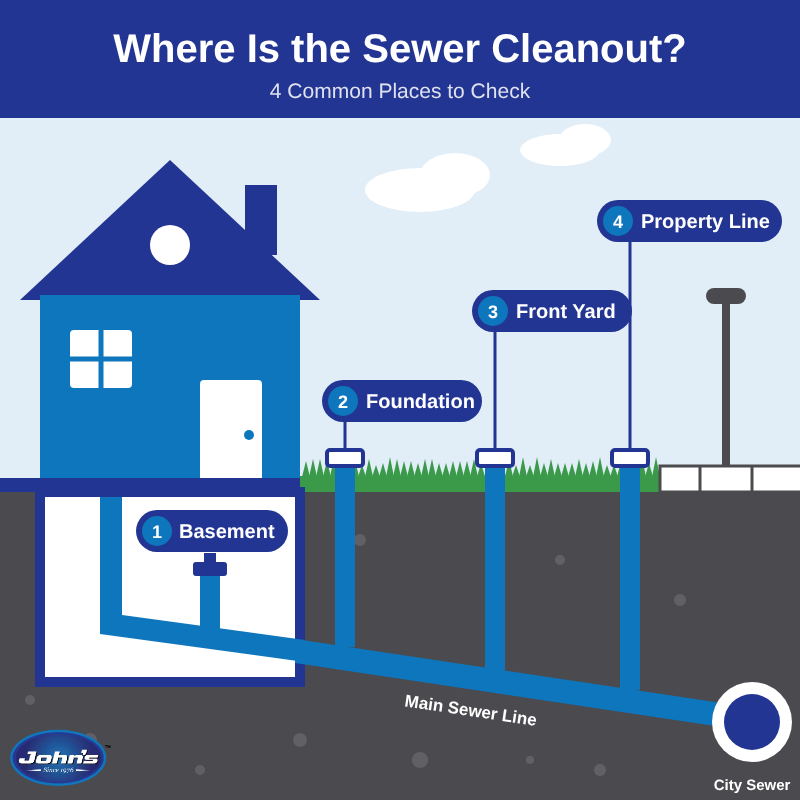 Location depends on the age of the house, the local code, and where the main sewer line leaves the building. Start by checking these common areas.
Near the Foundation
One of the most common places to find an outdoor sewer cleanout is near the home’s foundation. Look along the exterior wall where the main sewer line exits the building, particularly on the side facing the street.
The pipe may extend several inches above ground or sit nearly flush with the surrounding landscaping.
Near the Property Line
A property line cleanout sits near the edge of your lot, close to where your private line meets the city sewer. Look near the sidewalk, curb, or edge of the front yard. The exact placement varies, so not every home will have one in this location. Many cities require one, including Boston.
In the Front Yard
Homes with longer sewer lines may have cleanouts installed farther from the foundation. These can be hidden beneath grass, mulch, or landscaping.
Look for a capped plastic or metal pipe along the likely path between your home and the street. Avoid digging until you know where underground utilities and plumbing lines are located.
Inside the Basement
Many older homes in the Boston area have an indoor sewer cleanout. These are often installed on the main drain pipe in the basement, near the floor or foundation wall. Older systems may have cast iron fittings with a square-headed plug. An indoor cleanout is handy in colder climates, since an outdoor one can end up under two feet of snow.
Still can’t find your sewer cleanout? A plumber can help locate an existing cleanout or determine whether your property would benefit from having one installed. A camera inspection and locating equipment may help identify the sewer line’s path.
What Types of Sewer Cleanout Caps Are There?
| Cap Type | Where It Shows Up | What to Know |
| Plastic cap (PVC or ABS) | Most newer home installations | Light, will not rust, and comes off with basic tools |
| Cast iron cap | Older homes and indoor cleanouts | Heavy and long lasting, but can rust tight to the fitting |
| Brass plug | Older cast iron cleanouts | Holds up well, though the threads can seize over the years |
| Twist-off or test cap | Some outdoor cleanouts | Quick to remove, but easier to crack or lose |
A sewer cleanout cap should fit securely to prevent wastewater, debris, and sewer gas from escaping or entering the system.
If a cap is rusted, cracked, or difficult to remove, avoid forcing it open. Excess pressure can damage older fittings and create additional repairs. A plumber can assess the condition of the cap and determine the safest way to remove or replace it.
Why Do You Need a Sewer Cleanout?
Your main sewer line carries wastewater from the home’s connected drains toward the municipal sewer or septic system. When that line becomes clogged or damaged, a sewer cleanout gives plumbers an accessible entry point to inspect and service the pipe.
There are three major benefits of having an accessible sewer cleanout.
Faster Clog Clearing
When a main sewer line blockage occurs, a technician can run a drain cleaning cable or a water jetting hose straight into the main line to remove any grease, debris, or other obstructions. An accessible cleanout allows the technician to reach the line directly, otherwise they may need to access the system through another suitable opening, such as a removed toilet or a roof vent.
These alternative methods can require additional labor and equipment, potentially increasing the time and cost of clearing a blockage.
Sewer Video Inspection Without Digging
During a video inspection, a technician inserts a waterproof camera into the pipe to examine its interior. The footage can help identify problems such as:
- Tree root intrusion
- Cracked or damaged sewer pipes
- Grease and debris buildup
- Offset pipe joints
- Sagging sections where wastewater collects
- Other visible obstructions or structural defects
Camera inspections help plumbers locate problems without immediately excavating the sewer line. Heavy blockages such as tree roots or collapsed sections may prevent the camera from reaching the entire pipe.
Easier Routine Maintenance
Sewer lines can develop buildup over time, especially in properties with recurring grease accumulation, tree root intrusion, or aging pipes. An accessible cleanout makes it easier for plumbers to perform maintenance when needed, without creating a new access point for every service visit.
Regular maintenance may also help reduce the risk of an unexpected sewage backup, particularly for properties with a history of drainage problems. A working cleanout is valuable when buying or selling a home, too. If a sewer inspection is recommended, accessible entry points can make it easier to evaluate the condition of the line.
Does Every Home Have a Sewer Cleanout?
Not every home has an accessible sewer cleanout, although modern plumbing systems generally include required cleanout access.
The location and number of sewer cleanouts can also depend on the home’s construction.
- Homes built on concrete slab: The cleanout is usually outside the foundation, so nobody has to cut through concrete to reach the line.
- Homes with basements or crawl spaces: These often have an indoor cleanout plus one outside.
- Newer homes: A newer home typically has a cleanout near the foundation and a second one near the property line, depending on local code.
- Older homes: Some have only a basement cleanout with a seized cap. Some have nothing usable at all.
If your home does not have a usable sewer cleanout, a licensed plumber may recommend installing one. Adding a cleanout can make future inspections and drain cleaning easier, especially if your property experiences recurring sewer line problems.
What Problems Can a Sewer Cleanout Have?
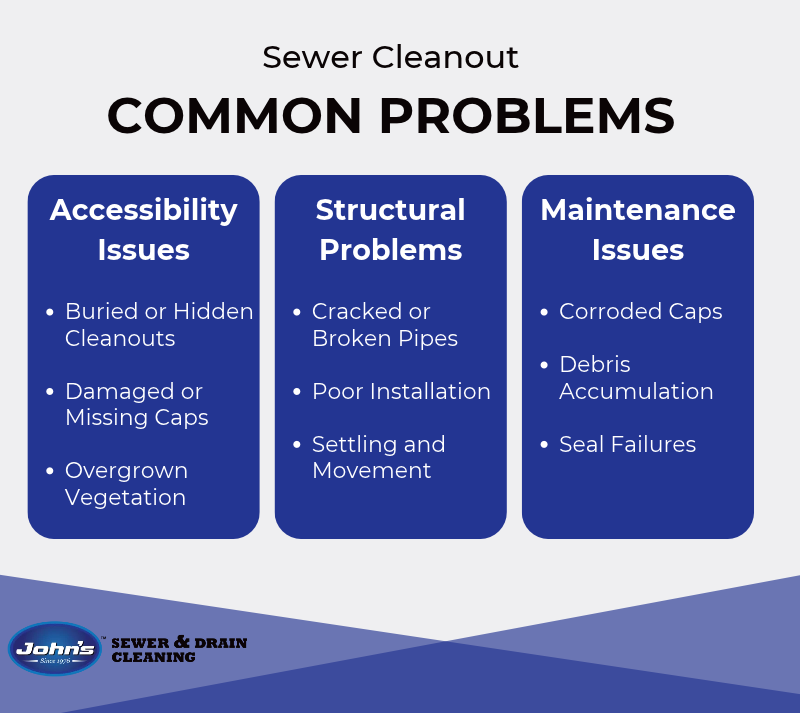
Although sewer cleanouts are relatively simple components, they can develop issues that make them difficult or unsafe to use.
- Buried or hidden cleanouts: Grass, mulch, soil, and landscaping can cover access points, making them difficult to locate during a sewer emergency.
- Cracked or missing caps: Damaged caps may allow debris or stormwater into the sewer line and can let sewer gas escape.
- Seized cast iron plugs: Corrosion can make older cleanout caps difficult to remove without damaging the fitting.
- Broken cleanout risers: Lawn equipment, vehicles, or other impacts can damage pipes that extend above ground.
- Settling or poor installation: Ground movement, aging materials, or improper installation can pull the riser out of the main line, damage the fitting, or affect equipment access.
A damaged sewer cleanout should be inspected and repaired rather than left exposed. Even if the drains are currently working, a broken cap or fitting can create problems later.
How Do You Take Care of a Sewer Cleanout?
Keeping your sewer cleanout accessible and in good condition does not require much maintenance. A few simple steps can help prevent problems when the line needs service.
- Check the sewer cleanout cap periodically for visible cracks, damage, or looseness.
- Keep grass, shrubs, mulch, and other landscaping from covering the opening.
- Clear snow and ice around outdoor cleanouts when safe to do so.
- Record the location with a photo so you can find it quickly.
- Avoid parking, driving, or placing heavy objects over unprotected cleanouts.
- Contact a plumber if the cap is missing, damaged, leaking, or difficult to access.
You should also watch for warning signs that suggest a problem with the sewer main line.
Common signs of a sewer line blockage include:
- Multiple drains slowing down or backing up
- Gurgling sounds coming from toilets or drains
- Wastewater rising through a basement floor drain
- Sewage odors around the cleanout or other plumbing fixtures
- Wastewater leaking or overflowing near the cleanout cap
If wastewater is coming out of your cleanout, stop using water inside the home and contact a professional drain cleaning company. Opening a cleanout during an active backup can release sewage, so leave the cap in place until a professional assesses the situation.
For homes with recurring blockages, mature trees near the sewer line, or older plumbing, a sewer camera inspection can help identify problems that require cleaning or repair.
Schedule a Sewer Cleanout and Main Line Inspection
John’s Sewer and Drain Cleaning has served homes and businesses across the Boston area since 1976. Our technicians can help locate sewer cleanouts, clear blocked main sewer lines, and run camera inspections to identify problems inside your pipes.
Whether you’re dealing with recurring clogs, slow drains, or a sewage backup, we’re here to help. A live person answers our phones 24 hours a day, seven days a week, and our goal is to arrive at your door within two hours.
Contact John’s Sewer and Drain Cleaning or call today to schedule a sewer inspection or request service for a blocked main sewer line.