
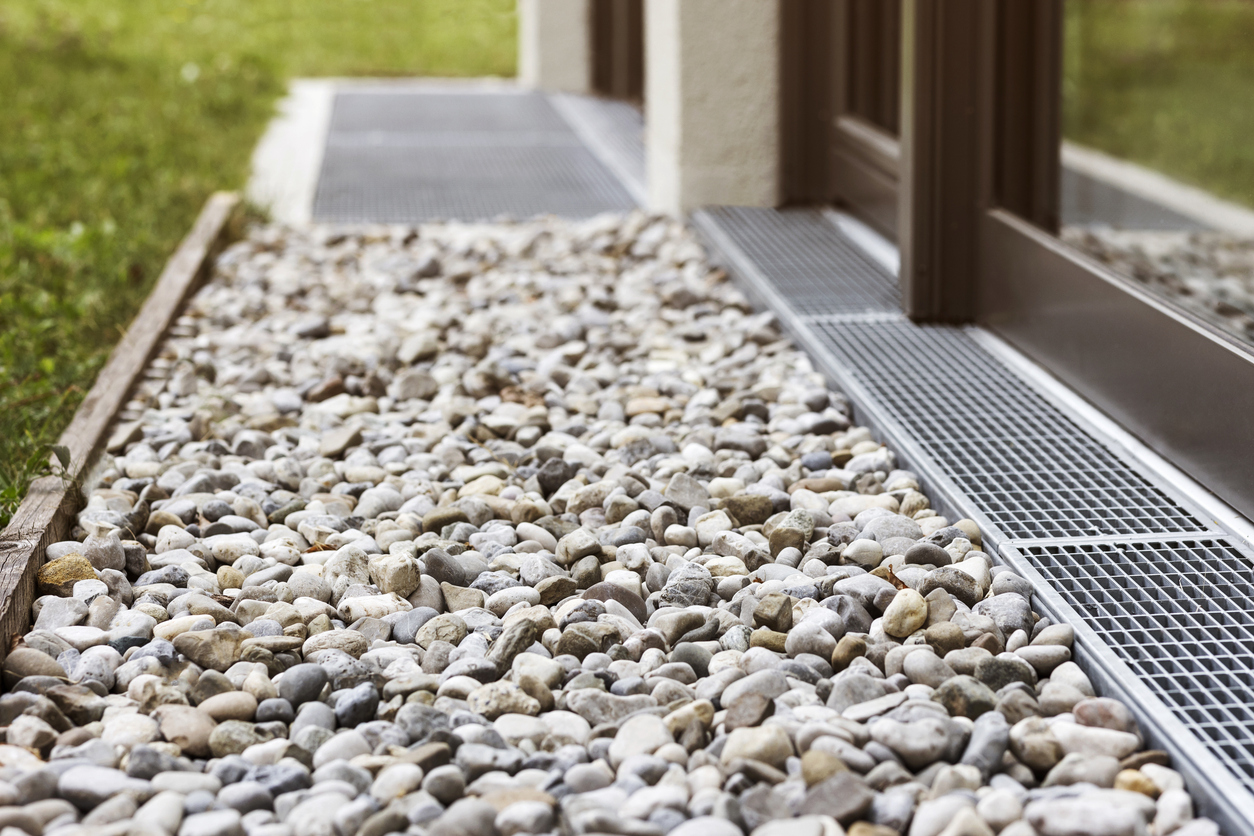
At a Glance: French drains and trench drains serve different purposes in managing water around your property. French drains handle subsurface water using a perforated pipe and filter fabric to redirect groundwater away from your home’s foundation. Trench drains manage surface water through a narrow channel system that collects and diverts water from driveways, patios, and other hard surfaces.
Both drainage systems play important roles in preventing water damage, but choosing the right one depends on your specific drainage needs. Understanding the key differences between these two drainage solutions helps you select the perfect solution for protecting your property from excess water and potential flooding issues.
Understanding French Drains
What Is a French Drain and How Does It Work?
A French drain is an underground pipe system designed to redirect subsurface water away from your home’s foundation and surrounding soil. This drainage system uses a perforated pipe wrapped in filter fabric and surrounded by gravel to collect and channel groundwater to a designated drainage point.
The system works by creating a path of least resistance for water moving through the soil. When groundwater encounters the gravel bed around the drain pipe, it naturally flows into the system through the perforated holes. The underground pipe then carries collected water to safe discharge locations like storm sewers or septic tanks, preventing foundation damage and yard drainage problems.
Best Applications for French Drains
French drains work best for these specific drainage needs:
- Foundation Protection: Installing a French drain system around your home’s foundation prevents water from pooling and causing structural damage or basement flooding.
- Landscape Design: These systems help manage water in low-lying areas of your yard where soil erosion or standing water can create problems.
- Subsurface Water Management: French drains excel at handling groundwater that moves through the soil, especially in areas with poor natural drainage.
- Septic System Support: Properties with septic tanks often use French drains to manage excess water around the drain field.
Installation Process
Professional French drain installation follows these steps:
- Planning and Marking: The technician marks utility lines and plans the drainage route from the problem area to the lowest point where water can safely discharge.
- Excavation: Create a trench typically 6-8 inches wide and sloped at least 1% toward the outlet.
- First Gravel Layer: Place a layer of gravel in the bottom of the trench.
- Pipe Installation: Install the perforated pipe with holes facing downward.
- Second Gravel Layer: Cover the pipe with more gravel.
- Filter Fabric: Place filter fabric over the entire gravel system.
- Backfilling: Cover with soil, leaving only the inlet and outlet visible.
Maintenance Requirements
French drains need regular cleaning to function properly. Over time, soil particles and debris can clog the filter fabric or perforated pipe, reducing the system’s effectiveness. Professional maintenance includes flushing the drain system and inspecting for root intrusion or pipe damage.
Watch for signs that your French drain needs attention:
- Standing water where the system should be draining
- Soggy soil above the drain line
- Water backing up near the inlet
These symptoms suggest blockages or system failure that require professional repair.
Understanding Trench Drains

What Is a Trench Drain and How Does It Work?
A trench drain is a surface drainage system that uses a narrow channel to collect and redirect surface water from paved areas, driveways, patios, and other hard surfaces. Unlike French drains that handle subsurface water, trench drains manage water that flows across the ground surface.
The system consists of a pre-formed channel topped with a removable grate that connects to underground drainage pipes. Surface water flows through the grate openings into the sloped channel, which directs water toward catch basins or storm sewers. This prevents pooling on walkways and driveways while allowing safe pedestrian and vehicle traffic above.
Best Applications for Trench Drains
Trench drains provide the perfect solution for these drainage situations:
- Commercial Settings: Loading docks, parking lots, and warehouse floors use trench drains to manage surface water and prevent slip hazards.
- Residential Applications: Pool decks, patio areas, and driveways benefit from trench drains that quickly remove surface water after heavy rain.
- Industrial Facilities: Manufacturing plants and food processing areas rely on trench drains for sanitation and safety compliance.
- Sports Facilities: Tennis courts, basketball courts, and other recreational surfaces use these systems to prevent water accumulation.
Types of Trench Drains
Several trench drain variations serve different purposes:
- Standard Trench Drains: Basic concrete or polymer channels with steel or plastic grates work well for most residential and light commercial applications.
- Slot Drain Systems: These feature narrow openings that provide a cleaner appearance while effectively managing surface water flow.
- Heavy-Duty Systems: Commercial and industrial applications require reinforced channels and grates capable of supporting vehicle traffic and heavy loads.
Installation Considerations
Proper trench drain installation requires careful planning of the slope and connection points. The channel must slope at least 0.5% toward the outlet to ensure proper water flow. Connection to existing storm sewer systems or other drainage infrastructure may require permits and professional installation.
The surrounding concrete or pavement must be properly graded to direct surface water into the trench. Poor installation can create low spots where water pools instead of flowing into the drainage system.
Maintenance Requirements
Regular cleaning keeps trench drains working effectively. Remove leaves, debris, and sediment that accumulate in the channel and on the grates. Some systems allow for easy grate removal to access the channel for thorough cleaning.
Commercial facilities often need more frequent maintenance due to higher debris loads and usage. Establish a cleaning schedule based on your specific conditions and local weather patterns.
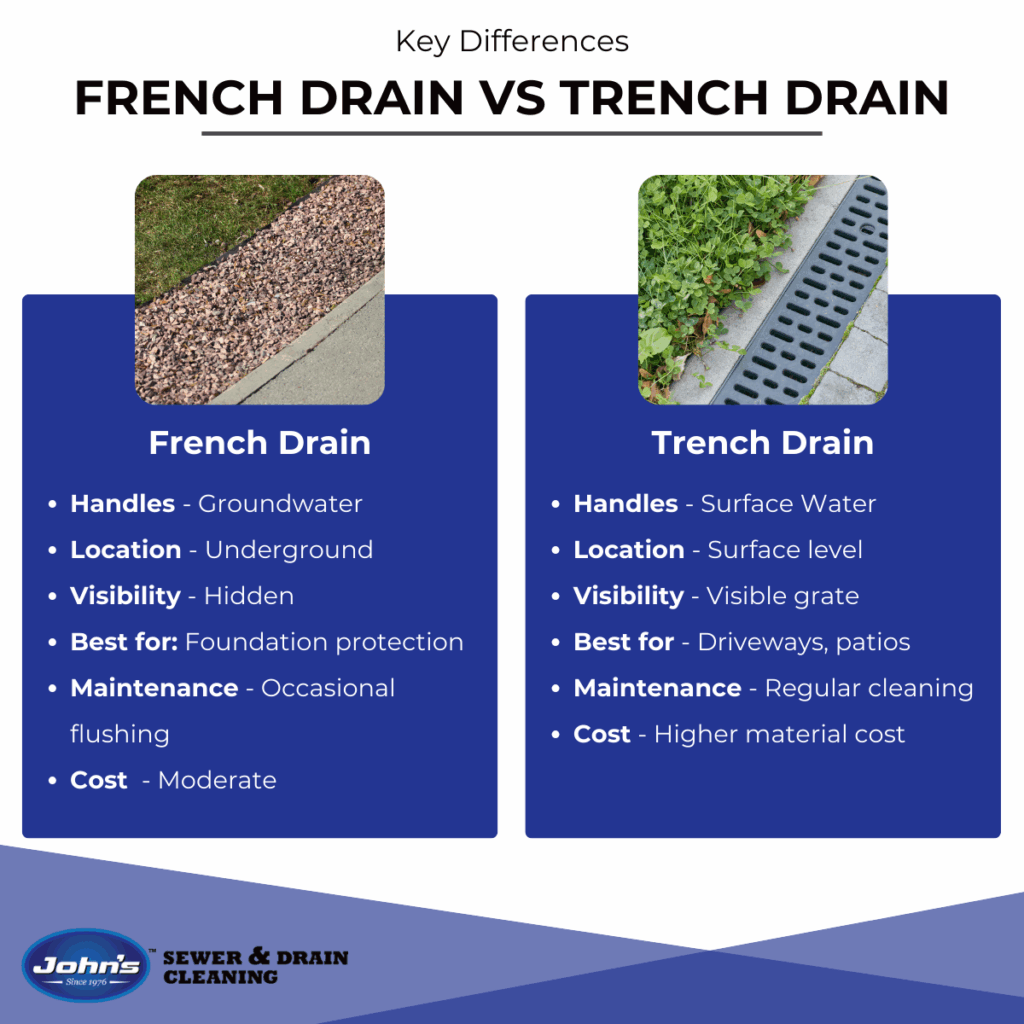
Key Differences Between French Drains and Trench Drains
Purpose and Function
The fundamental difference lies in what type of water each system handles.
- French drains manage water that moves through the soil, protecting foundations and preventing soil erosion around your property.
- Trench drains capture water that flows across surfaces, preventing pooling and slip hazards on walkways and paved areas.
Installation Location
- French drains are installed underground, buried beneath the soil surface, where they are invisible once the installation is complete.
- Trench drains are installed at surface level with visible grates that allow water entry while supporting foot and vehicle traffic.
Water Source Management
- French drain systems excel at handling groundwater, spring water, and subsurface moisture that threatens your home’s foundation or creates soggy yard conditions.
- Trench drains work best for managing rainfall, irrigation runoff, and other surface water that accumulates on hard surfaces.
Maintenance Approach
These drainage solutions require different maintenance approaches.
- French drains need occasional professional inspection and cleaning to remove sediment and ensure proper flow through the perforated pipe.
- Trench drains require more frequent maintenance to remove leaves, debris, and accumulated sediment from the channel and grates.
Choosing the Right Drainage Solution

Assess Your Drainage Problems
Location of Problem:
Start by identifying where water problems occur on your property. Standing water around your foundation or soggy areas in your yard suggest subsurface water issues that French drains address effectively. Water pooling on driveways, patios, or walkways indicates surface drainage problems where trench drains provide a better solution.
Source of Problem:
Consider the source of your excess water. Heavy rain that creates temporary flooding on paved surfaces calls for trench drain installation. Persistent moisture problems in basements or crawl spaces point toward groundwater issues requiring a French drain system.
Property Considerations
Your property’s layout influences which drainage system works best.
- Sloped yards naturally direct surface water downhill, making French drains effective for managing subsurface water along the slope.
- Flat areas with poor drainage may need both systems: French drains for soil water management and trench drains for surface water control.
Budget and Installation Factors
French drain installation typically costs less initially but may require more extensive excavation depending on the drainage issue. Trench drain systems often have higher material costs but a simpler installation in most situations.
Consider long-term maintenance costs when making your decision. French drains generally need less frequent maintenance but require professional service when problems occur. Trench drains need regular cleaning that homeowners can often handle themselves.
Professional Assessment
A professional drainage evaluation helps determine your specific needs and the most effective solution. Experienced technicians can identify the source of water problems, assess soil conditions, and recommend the appropriate drainage system for your situation.
Signs of System Problems
Watch for these warning signs that indicate drainage system problems:
French Drains:
- Water pooling where the system should be draining
- Musty odors in basements or crawl spaces
- Foundation cracks or settling
- Unusually lush vegetation above the drain line
Trench Drains:
- Water overflowing the channel during moderate rainfall
- Slow drainage or standing water in the channel
- Damaged or loose grates
- Unpleasant odors from the drain
When to Call Professionals
Contact drainage professionals when you notice persistent problems despite regular maintenance. Complex repairs, system upgrades, or installation of additional drainage components require specialized knowledge and equipment.
Professional help becomes important if your drainage problems affect your home’s foundation, create safety hazards, or involve connection to municipal storm sewer systems. Licensed contractors understand local codes and can ensure work meets regulatory requirements.
Making the Right Choice for Your Property
French drains and trench drains serve different but important roles in managing water around your property. French drains excel at protecting your home’s foundation from subsurface water, preventing soil erosion, and managing groundwater issues that threaten your property’s structural integrity. Trench drains provide effective surface water management for driveways, patios, and commercial areas where standing water creates safety hazards or property damage.
The right drainage solution depends on your specific needs, property layout, and water source. Many properties benefit from both systems working together: French drains managing subsurface water while trench drains handle surface runoff. Professional evaluation helps identify your drainage problems and recommend the most effective approach.
Don’t let water damage threaten your property value or create costly repairs. Whether you need foundation protection from groundwater or surface water management for safety and convenience, the right drainage system provides long-term protection and peace of mind. At John’s Sewer and Drain Cleaning, our experienced technicians assess your specific drainage needs and provide the most effective solutions.