
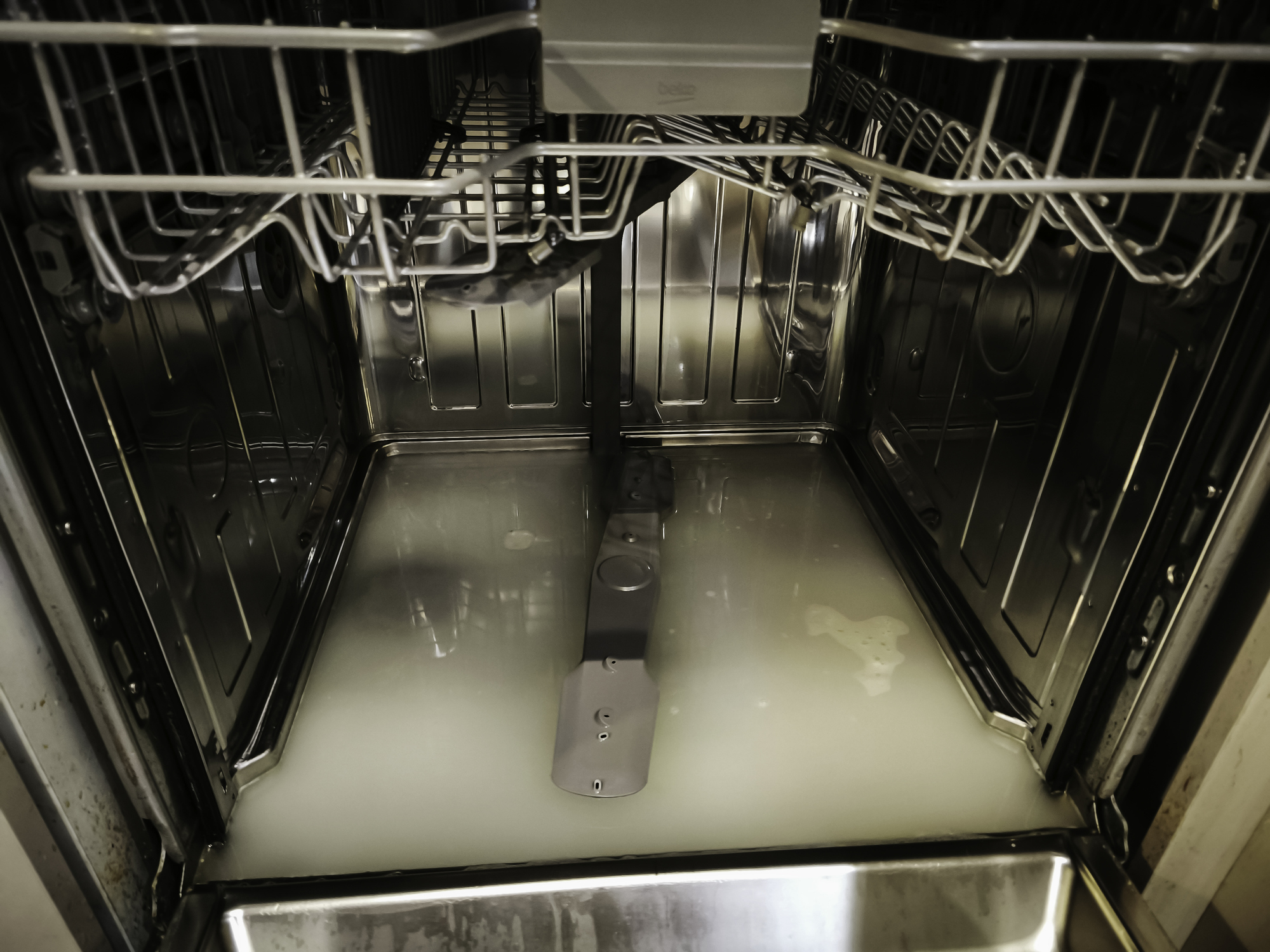
Short Answer: A dishwasher that won’t drain is usually caused by a clogged filter, blocked drain hose, or food debris stuck in the pump area. Most drainage issues can be fixed at home by cleaning the filter, checking the drain line for kinks, and running hot water through the garbage disposal. If these steps don’t work, the problem may involve the drain pump, air gap, or a deeper plumbing issue that needs professional attention.
Few things are more frustrating than opening your dishwasher after a wash cycle only to find standing water pooled at the bottom. Not only does this mean your dishes aren’t getting clean, but it can also lead to unpleasant odors and potential leaks. The good news is that most dishwasher drainage problems have straightforward causes and solutions.
How Your Dishwasher Drain System Works
Your dishwasher’s drain system relies on a few key components working together:
- Drain pump: Forces water out of the dishwasher
- Drain hose: Carries water to the sink drain or garbage disposal
- Filter: Catches food particles to prevent clogs
- Air gap: Prevents dirty water from flowing back into the dishwasher
During the wash cycle, water is pumped through the spray arms to clean your dishes. Once the cycle completes, the drain pump pushes dirty water out through the drain hose, which connects to either your sink drain, garbage disposal, or an air gap mounted on your countertop.
When any of these parts get blocked or stop working, water ends up sitting at the bottom of your dishwasher.
Common Causes of Dishwasher Drainage Problems

Clogged Filter or Drain Basket
The most common reason for drainage issues is a clogged filter. Your dishwasher’s filter catches food particles, grease, and debris to prevent them from clogging the drain pump. Over time, this buildup can become so thick that water can’t pass through. Most modern dishwashers have a removable filter located at the bottom of the tub, beneath the bottom rack.
Blocked Drain Hose
The drain hose connects your dishwasher to the sink drain or garbage disposal. Food debris, grease, and soap scum can accumulate inside the hose, restricting water flow. The hose can also develop a kink if it was bent during installation or if items stored under the sink have pushed against it.
Garbage Disposal Connection Issues
If your dishwasher drains through the garbage disposal, a full or clogged disposal will prevent water from draining. If you recently installed a new dishwasher or garbage disposal, the knockout plug inside the disposal connection may not have been removed.
Air Gap Blockage
Many homes have an air gap installed on the countertop or sink. This small fixture prevents contaminated water from flowing back into your dishwasher and can become clogged with debris over time.
Drain Pump Problems
If the drain pump motor fails or gets jammed by a foreign object like broken glass or a small utensil, water won’t exit. You might hear a humming sound during the drain cycle if the pump is trying to work but can’t.
Sink Drain Blockage
Sometimes the problem isn’t with your dishwasher at all. A clog in your sink drain or main drain line can back up into the dishwasher. If your kitchen sink is also draining slowly, this is likely the culprit.
Step-by-Step Troubleshooting Guide
Before starting, disconnect the power supply to your dishwasher for safety. Have towels on hand and wear protective gloves.
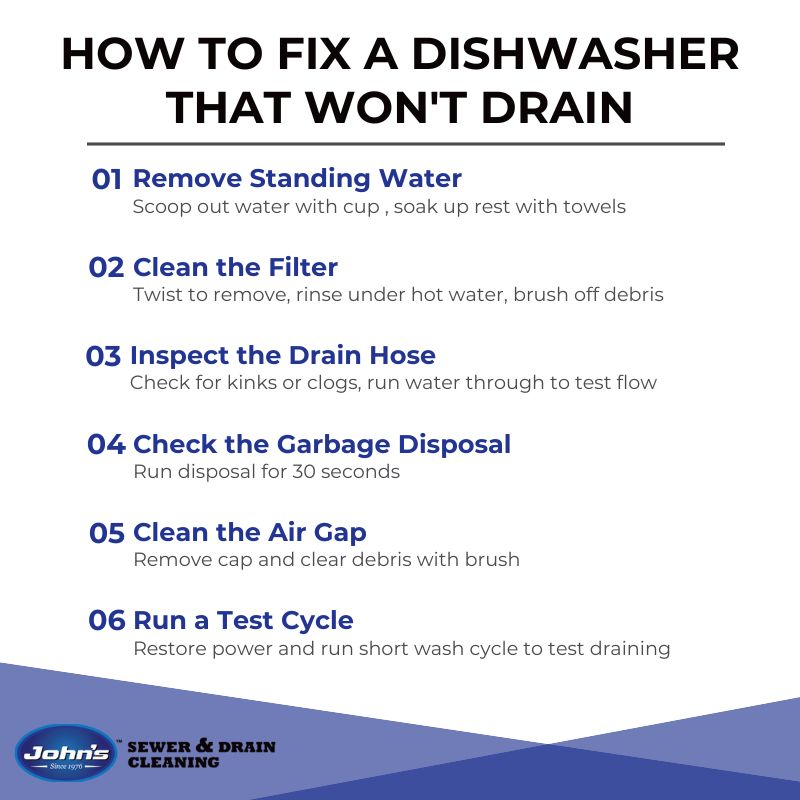
Step 1: Remove Standing Water
Use a cup to scoop out standing water from the bottom of the dishwasher, then use towels to soak up the rest.
Step 2: Clean the Filter
Locate the filter at the bottom of your dishwasher. Most filters twist counterclockwise to unlock and lift out. Rinse under hot water and use a soft brush to remove food particles. Check your owner’s manual for specific instructions. While the filter is out, look into the pump area for visible debris.
Step 3: Inspect the Drain Hose
Pull your dishwasher out slightly to access the drain hose. Check the entire length for kinks that could restrict water flow. To check for clogs, disconnect the hose and run water through it. If water doesn’t pass through, use a bottle brush to clear the blockage.
Step 4: Check the Garbage Disposal
If your dishwasher drains through a garbage disposal, run the disposal with cold water for 30 seconds to clear food debris. If you recently installed a new dishwasher or disposal, verify that the knockout plug was removed.
Step 5: Clean the Air Gap
If your home has an air gap, remove the cap and check for debris inside. Clean it with a small brush.
Step 6: Run a Test Cycle
Restore power and run a short wash cycle to test proper draining.
When DIY Fixes Don’t Work
If you’ve gone through all the troubleshooting steps and your dishwasher still won’t drain, the problem may be more serious.
Call a professional if:
- The drain pump makes no noise during the drain cycle
- You hear grinding or unusual sounds from the pump
- Water is backing up into your sink when the dishwasher drains
- Multiple drains in your home are slow or backing up
- The issue started after a plumbing change elsewhere in your home
A professional can diagnose whether the issue is a failed drain pump or a plumbing issue in your drain lines. Sometimes what looks like a simple dishwasher repair actually points to a larger problem in your home’s drainage system.
Preventing Future Drainage Issues
Once you’ve fixed the immediate problem, a few simple habits can help prevent future drainage issues:
- Scrape dishes before loading: You don’t need to pre-rinse, but scraping large food particles into the trash reduces debris reaching the filter.
- Run hot water before starting: Run hot water at your kitchen sink before each wash to help the dishwasher start with hot water.
- Clean the filter monthly: A quick rinse once a month prevents major buildup.
- Run the disposal regularly: If your dishwasher connects to a garbage disposal, run it before starting the dishwasher.
- Use the right detergent: Follow your owner’s manual recommendations to avoid residue buildup.
- Inspect the drain hose annually: Check for kinks, cracks, or buildup inside the hose once a year.
Get Your Dishwasher Draining Again

A dishwasher that won’t drain is inconvenient, but in most cases, you can fix it yourself by cleaning the filter, checking the drain hose, and making sure the garbage disposal connection is clear. Regular maintenance prevents these problems from happening.
If your DIY troubleshooting hasn’t solved the problem, or if you suspect a deeper plumbing issue is affecting your dishwasher’s drainage, professional help is your next step. Drainage problems from clogged or damaged drain lines need specialized equipment to diagnose and repair.
At John’s Sewer and Drain Cleaning, we’ve been helping Boston-area homeowners solve drainage problems since 1976. Our experienced technicians can quickly identify whether your dishwasher issue is an appliance problem or something more serious in your plumbing system. With 24-hour service and a goal to be at your home within two hours, we’re here when you need us. Contact us today to get your drains flowing again.