
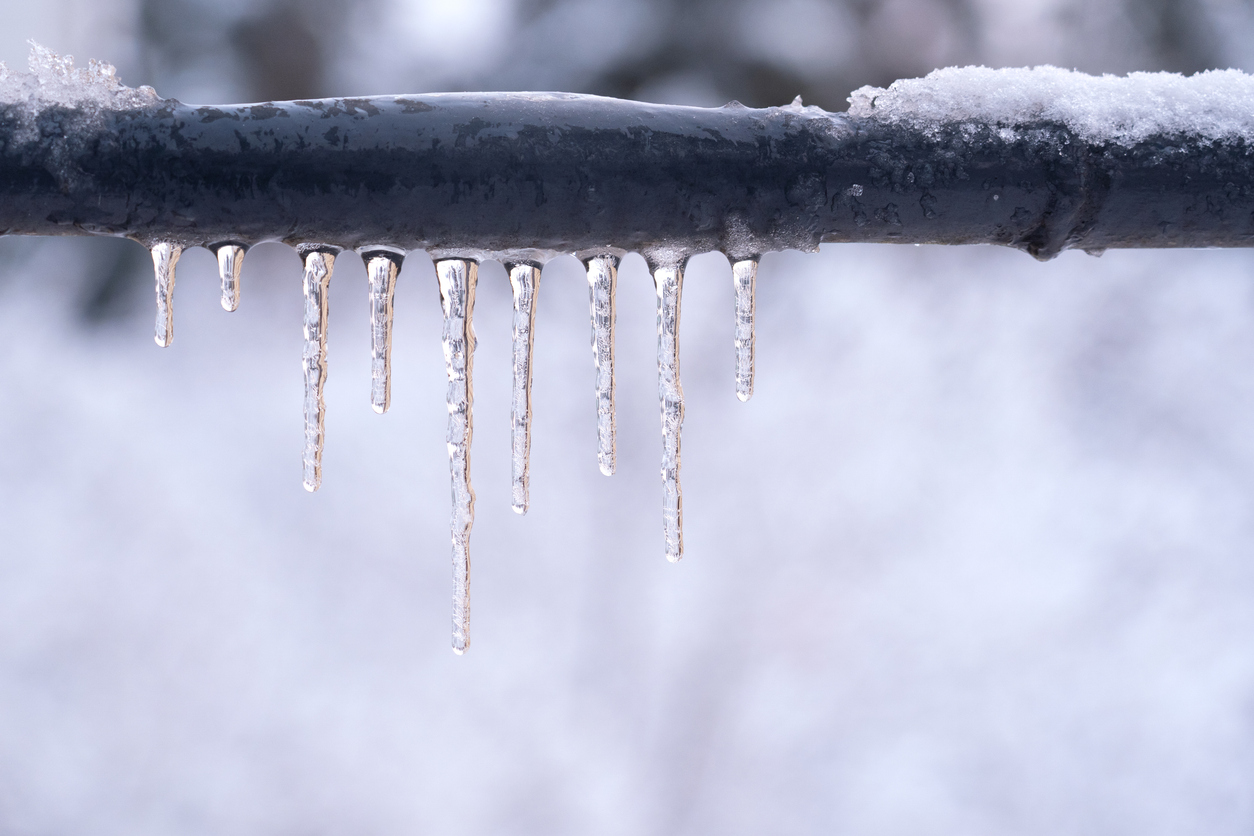
The Short Answer: A frozen septic tank occurs when freezing temperatures cause the pipes or tank to freeze, leading to backups and potential damage. If your septic tank freezes, it’s important to call a professional for help. Prevention is key: insulating pipes, using heat tape, and maintaining your system during the winter can help keep things running smoothly.
What Causes a Frozen Septic Tank?
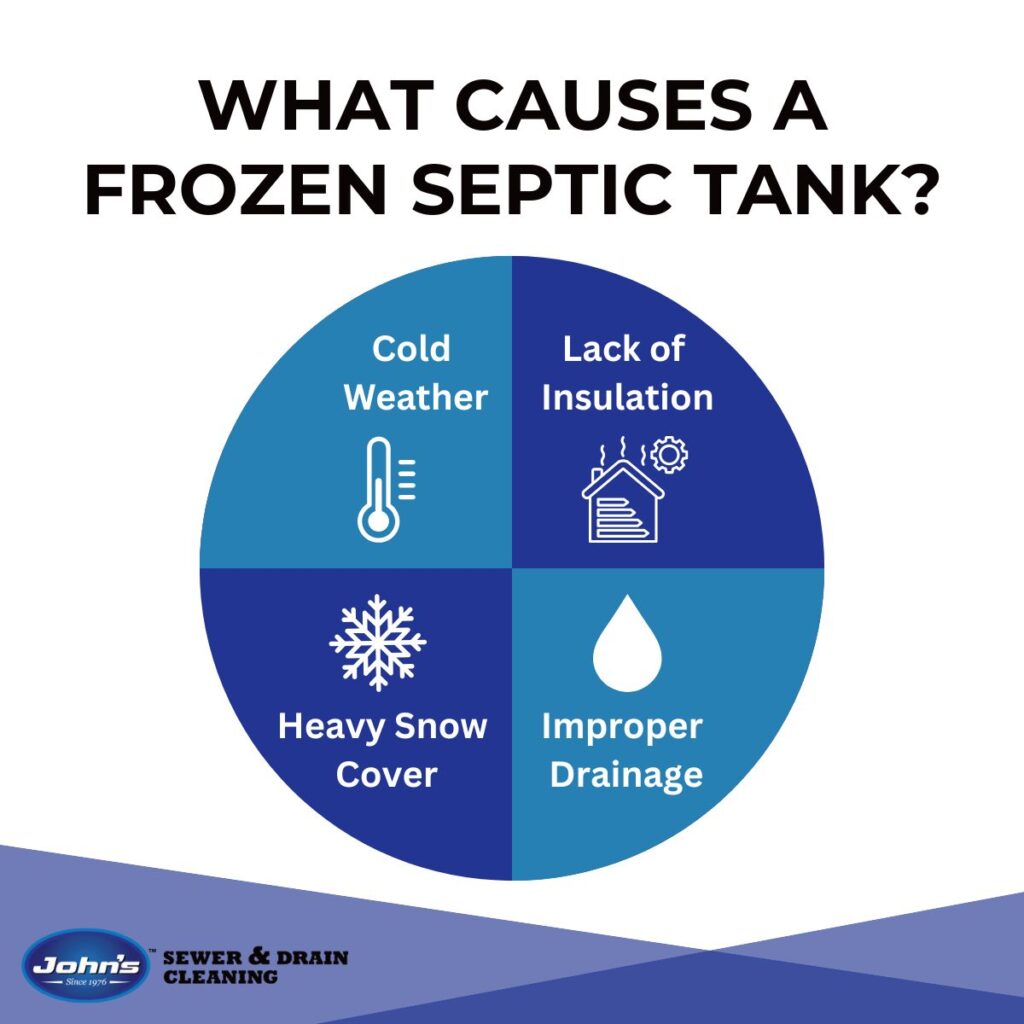
A septic tank freeze happens when temperatures drop below freezing for an extended period. Several factors can cause a septic tank to freeze:
- Cold Weather: Extremely cold temperatures are the primary cause of frozen septic systems. When the temperature drops below 32°F, septic lines, tanks, and pipes are at risk of freezing.
- Lack of Insulation: Septic systems buried too shallowly or without enough insulation are more susceptible to freezing. Adding extra insulation around your septic system is a good preventative measure.
- Heavy Snow Cover: Snow acts as an insulating barrier that can keep ground heat from reaching septic lines and tanks, which makes the system more likely to freeze in cold weather. If snow covers your septic tank or drain field, it can create a frozen septic system.
- Improper Drainage: If the drainfield (or leach field) is poorly maintained or saturated with water, it can become prone to freezing. Freezing temperatures combined with excess water in the soil can lead to a frozen septic tank.
How Can You Tell If Your Septic Tank Is Frozen?
A frozen septic system can be difficult to detect until you begin to experience problems. Here are the common signs that your septic tank may be frozen:
- Slow Draining or No Drainage: If wastewater from sinks, showers, or toilets isn’t draining properly, there may be a blockage caused by frozen pipes in your septic system. Frozen septic pipes can prevent wastewater from flowing correctly.
- Unpleasant Odors: A frozen septic tank can cause wastewater to back up into your home. If you notice bad odors coming from your drains, your septic system might be frozen.
- Gurgling Noises in Drains: If your drains are making strange gurgling sounds, it could be a sign that wastewater is being blocked by frozen pipes.
- Frozen Ground: A cold, frosty patch of soil over the septic tank or drain field can indicate that the ground is frozen, which can prevent proper wastewater drainage.
What Issues Can a Frozen Septic Tank Cause?
A frozen septic tank and system can create several major problems for your home and the environment:
Sewer Backup
If the septic tank freezes, wastewater has nowhere to go, causing a backup that can lead to unsanitary conditions inside your home. This can also lead to overflowing in your yard, creating a potential health hazard.
Costly Repairs
Frozen septic systems can cause cracks in the pipes, which may lead to leaks. These issues can result in extensive damage to your yard and septic system. Costly repairs may include replacing damaged pipes or having the entire septic system pumped and reinstalled.
Environmental Impact
A frozen septic tank may overflow into the surrounding soil, which can lead to contamination of the groundwater. This can be harmful to both the environment and your health.
How to Prevent Your Septic Tank from Freezing
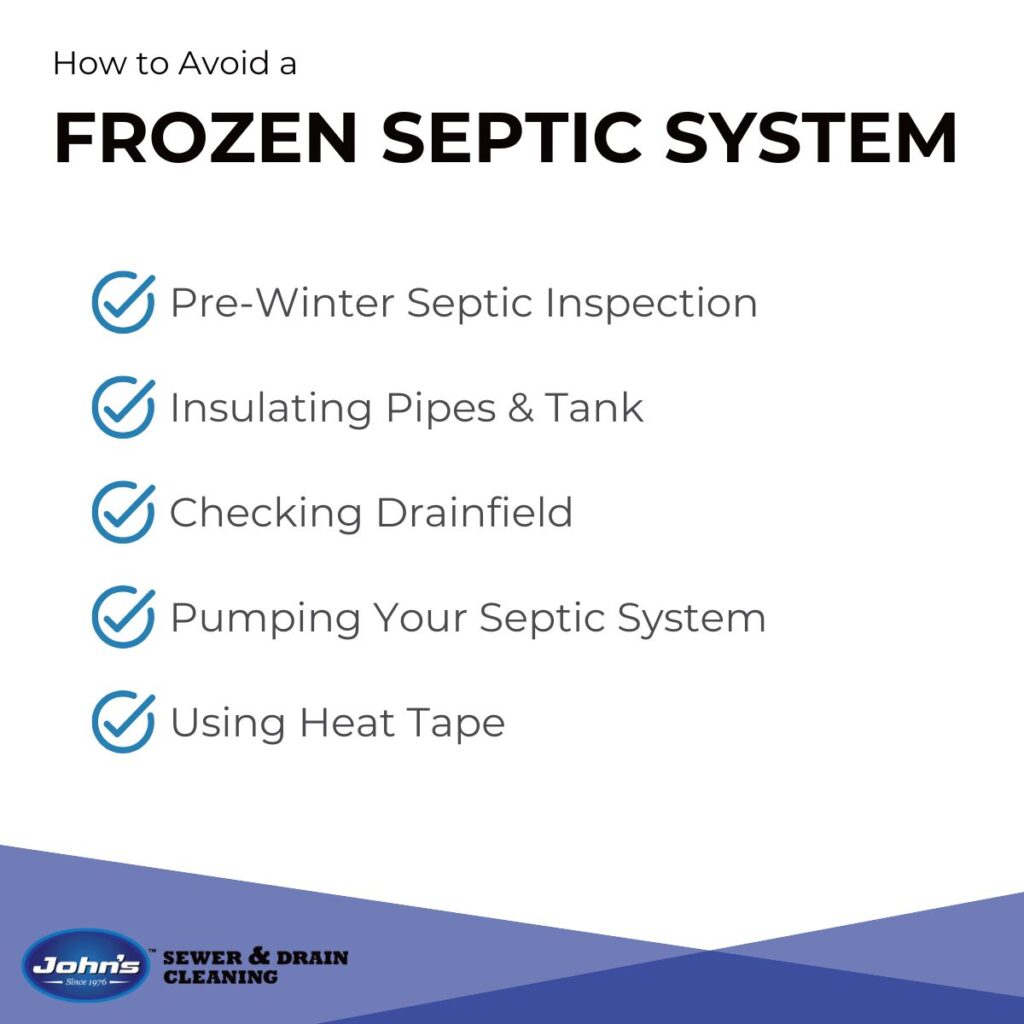
Prevention is the best way to avoid the mess and damage that come with a frozen septic system. Use these steps to help protect your tank, pipes, and drain field through the winter months:
Insulate the Septic System
Adding extra insulation around the septic tank and pipes, and covering the area with a layer of mulch, can help keep the system warmer and reduce the risk of freezing. Consider using heat tape on your septic pipes for added protection against freezing temperatures.
Increase Tank Burial Depth
If your septic system is shallow, it is more prone to freezing. If you’re building or remodeling, consider installing your tank and pipes deeper in the ground to provide better natural insulation and avoid the freezing problem caused by extreme cold temperatures.
Keep the Drainfield Clear
Ensure that the soil treatment system is properly maintained and not clogged. If snow is piled over the drain field, clear it back so ground warmth can reach the soil and help keep the septic field from freezing. Additionally, ensure that your septic field is properly sloped to allow water to flow freely through it.
Use Heat Tape
Installing heat tape along the septic pipes can help prevent freezing. Heat tape is a self-regulating electric heating element that can be wrapped around the pipes to maintain a constant temperature, preventing freezing. This is particularly useful for septic lines that are exposed to the cold.
Avoid Overloading the System
During the winter, avoid doing laundry and other water-intensive activities on the coldest days. Overloading the septic tank and pipes can lead to backups, and extra water in cold temperatures can increase the risk of frozen lines. Be mindful of water usage to avoid adding too much wastewater to the system at once.
Stay on top of maintenance
Regular septic inspections before winter can catch issues early. Routine pumping also helps keep the tank from getting too full, which can increase the risk of frozen lines during cold weather.
What to Do if Your Septic Tank Freezes?
If your septic system does freeze, it’s essential to take the following steps to address the problem:
Call a Professional Plumber
If you suspect your septic tank is frozen, call a professional plumber or septic service provider immediately. A licensed technician will have the tools and expertise to identify and resolve the issue quickly and safely.
Thawing the Septic System
For frozen pipes, a technician may use hot water or steam to thaw the pipes carefully. In some cases, high-pressure jetters can help clear blockages caused by ice. Always ensure a professional handles this task to avoid causing further damage to your septic pipes or tank.
Avoid Using Hot Water in Excess
While it may seem helpful to pour boiling water down the drain to melt the ice, this can cause further damage by expanding the ice inside the pipes. Instead, allow the expert to thaw the system slowly using safe methods, such as warm water or controlled heat from tank heaters.
Inspect Your Septic System Regularly
Routine septic inspections, especially before winter, can help identify any issues that could lead to a freezing problem. Regular septic pumping helps prevent the system from getting too full, which can increase the risk of frozen lines during cold weather.
Protect Your Septic System This Winter
A frozen septic system can cause major issues, from backups to costly repairs, especially during the winter. By taking preventative measures, like insulating your system and using heat tape, you can protect your pipes and tank from freezing temperatures.
Frozen septic tanks or pipes should be handled by a professional plumber right away to prevent further damage. With proper care, your septic system can stay functional and efficient, even in extreme cold weather.
If you’re experiencing issues with your sewer or drain system this winter, don’t hesitate to reach out to John’s Sewer and Drain Cleaning. We offer 24/7 emergency services, fast response times, and expert solutions. Contact us today to learn more about how we can help!