
The Short Answer: A plumbing stack is a vertical pipe system that moves waste water through the drain stack to the main drain line while providing ventilation through the vent stack. It’s an essential component of your home’s plumbing system that helps maintain proper drainage and prevents dangerous sewer gases from entering your living space.
Your plumbing system is more complex than meets the eye, and understanding how plumbing vent stacks work can help you maintain your property better. Throughout this guide, you’ll learn about the main parts of a plumbing stack, how it functions as both a soil stack and vent pipe, and why it matters for both homeowners and business owners.
Whether you manage a multi-story building or own a single-family home, plumbing stacks play a major role in keeping your drains working properly and your indoor air clean. These vertical pipes do more than just move waste – they’re part of an integrated drainage system that balances air pressure and keeps harmful gases out of your living spaces. Let’s explore everything you need to know about this important plumbing component.
What Is a Plumbing Stack and How Does It Work?
A plumbing stack is a vertical piping system that moves wastewater from upper floors down to the main drain line while allowing air to flow through the pipes. This home’s plumbing system consists of three main components – the soil stack, vent stack, and drain stack – working together to properly drain water and prevent negative pressure in your plumbing.
The plumbing vent stack forms the backbone of your drainage system, running vertically from the basement through the roof. This system of vertical pipes manages both the removal of wastewater and the air pressure needed for proper drainage.
Main Components

The plumbing stack has three primary parts working together:
- Soil Stack: This is the main vertical pipe that carries wastewater from plumbing fixtures down to the home’s main drain line. It handles the heaviest waste and requires the largest diameter drain pipes.
- Vent Stack: Running alongside the soil stack, this plumbing vent pipe extends through the roof to allow fresh air into the system. The air flow helps push waste down while preventing vacuum effects that could empty P-traps.
- Waste Stack: This component carries grey water from sinks, showers, and appliances. It connects to the main stack vent but handles lighter waste materials.
Construction and Materials
Modern plumbing stacks typically use PVC (polyvinyl chloride) pipes, which are lightweight, durable, and resist corrosion. Older homes often have cast iron stacks, which are heavier but excellent at dampening drain noise. The size of stack pipes usually ranges from 3 to 4 inches in diameter for main stacks.
How Water Flows
Water flow in a plumbing stack relies on gravity and air pressure. When you flush a toilet or drain a sink, the waste enters the stack and falls downward. The vent’s air supply prevents the formation of vacuum pockets that could cause slow drainage. As water flows down, it follows a spiral pattern along the pipe walls rather than falling straight down, which helps maintain consistent flow without overwhelming the system.
Location and Installation
The plumbing stack typically runs inside interior walls near bathrooms and kitchens. It connects to horizontal drainage pipes on each floor and extends at least 6 inches above the roof line to allow proper venting. This placement helps protect against freezing and maintains proper system function year-round.
Types of Plumbing Stacks and Their Functions
Soil Stack vs Vent Stack
A plumbing stack system can be broken down into two main categories: soil stacks and plumbing vent stacks.
- Soil stacks, also called drain stacks, are the vertical pipes that carry wastewater and solid waste from toilets, sinks, and other plumbing fixtures down to the main sewer line.
- Vent stacks and vent pipes extend up through the roof to allow proper air pressure circulation, which helps water flow smoothly and prevents trap seal loss. If you’re having issues with this particular system, check out our blog on how to address a clogged vent pipe.
Single-Stack System vs Two-Stack System
- Single-stack systems are common in smaller residential buildings, where one main vertical pipe handles both drainage system functions and venting. This setup works well for homes up to two or three stories tall.
- Two-stack systems, more frequently found in larger buildings, use separate drain pipes and plumbing vent pipes, offering better performance for complex plumbing layouts.
Branch Lines
Branch lines connect individual fixtures to the main plumbing stacks. In residential buildings, these branches typically follow simple routes, connecting bathrooms, kitchens, and laundry areas. Commercial properties often need more complex branch configurations to serve multiple restrooms, industrial sinks, and specialized equipment. Multi-story structures require careful planning of stack placement, with branches at each floor connecting to the main vertical pipes.
Building Code Requirements
Local plumbing codes specify minimum pipe diameters for stacks based on the number of fixtures they serve. For example, a typical residential soil stack must be at least 3 inches in diameter, while vent stacks can be smaller. Codes also mandate maximum distances between vent connections and fixtures, proper slope for horizontal pipes, and specific requirements for stack placement near building foundations. Commercial buildings face stricter regulations, often requiring larger diameter pipes and additional venting to handle higher usage volumes.
Common Plumbing Stack Problems and Maintenance Tips
Warning Signs of Stack Problems
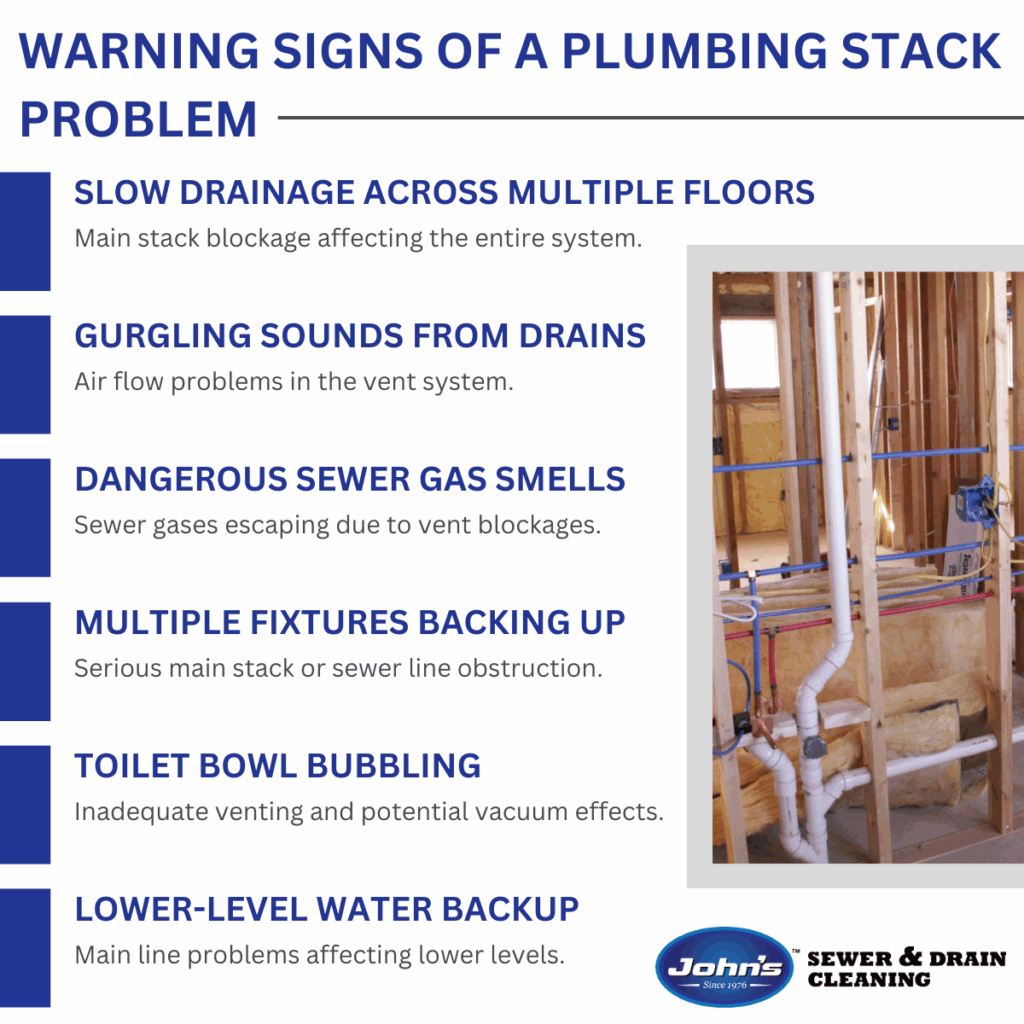
Your plumbing vent stack may need attention if you notice:
- Slow drainage in sinks, tubs, or toilets across multiple floors
- Gurgling sounds coming from drain pipes or toilet bowls
- Dangerous sewer gases and unpleasant smells near drains
- Multiple backed-up plumbing fixtures occurring at the same time
- Bubbling in toilet bowls when other fixtures drain
- Water backing up in lower-level fixtures
Regular Maintenance Checklist
To keep your home’s plumbing system working properly:
- Check roof vent pipe openings every six months for blockages from leaves or debris
- Listen for unusual sounds when fixtures drain
- Monitor drain speeds throughout the house
- Look for water marks or moisture around soil stack access points
- Schedule professional plumbing inspections yearly
- Clean drainage pipes before problems develop
When to Call a Professional
Contact a licensed plumber if you experience:
- Multiple clogged plumbing stack issues that don’t respond to plunging
- Persistent foul odors from sewer gas
- Visible damage to vent pipes
- Water backing up into lower-level plumbing fixtures
- Strange sounds coming from drain stacks when water drains
- Wet spots around stack vent locations
Prevention Tips
Take these steps to avoid plumbing problems:
- Never flush items that can clog drain pipes
- Run water regularly through unused fixtures
- Install drain strainers on all sinks
- Keep trees and shrubs away from underground drainage system
- Address minor plumbing issues before they become costly repairs
- Remove snow and ice from plumbing vent pipes during winter
Next Steps
A properly functioning plumbing stack is a foundation of any home’s plumbing system, working to prevent dangerous sewer gases and maintain proper air pressure. Regular maintenance helps avoid costly repairs and health hazards. Watch for warning signs like slow drains, unpleasant smells, or foul odors coming from multiple plumbing fixtures – these indicate your vent stack may need attention.
Professional plumbers can spot plumbing problems before they become emergencies. Schedule an inspection if you notice slow drainage, sewer gas smells, or backed-up drain pipes on lower floors. Don’t wait for complete system failure – addressing small plumbing issues early prevents major disruptions.
At John’s Sewer, our experienced technicians provide thorough plumbing stack inspections and maintenance. We use advanced diagnostic tools to check your drainage system and catch problems early. Contact us today to schedule a professional inspection or for 24/7 emergency service. Protect your home’s plumbing system with regular expert care.