
The Short Answer: A grease trap or grease interceptor is a plumbing device that captures fats, oils, and grease (FOG) from wastewater before it enters the municipal sewer system. The grease trap works by slowing down the flow of water and using the principle that grease floats on water to separate and trap FOG while allowing clean water to flow through.
Every day, commercial kitchens and restaurants produce wastewater containing fats, oils, and grease that can damage sewer lines and harm the environment. A commercial grease trap acts as a protective barrier between these food service operations and the sanitary sewer system. The device intercepts these substances before they can build up in pipes and cause blockages or overflows.
These specialized plumbing devices are most commonly found in restaurants, cafeterias, hotels, and other commercial food preparation facilities. They play a crucial role in preventing costly plumbing issues and protecting city infrastructure. Without grease traps, FOG would accumulate in sewer pipes, leading to backups, foul odors, and costly repairs. By capturing these materials at the source, grease interceptors help maintain proper wastewater flow and reduce the risk of environmental damage.
Basic Components and Design
Main Parts
A grease trap’s effectiveness as a plumbing device comes from its carefully engineered design that works with gravity and flow physics.
- The inlet pipe serves as the entry point where wastewater from commercial kitchen sinks and dishwashers flows into the system.
- Inside, a series of baffles – wall-like dividers – slow down the water flow, allowing retention time for separation.
- The main grease interceptor chamber provides space for fats, oils, and grease (FOG) to float to the surface while solid waste sinks.
- An outlet pipe positioned in the middle layer allows clarified water to exit, while the solids collection area at the bottom catches food particles and other debris.
Design Features
Size:
The size of a commercial grease trap matters significantly for its performance. Restaurants typically need larger units (750-2000 gallons) compared to smaller establishments (20-50 gallons). Most modern grease interceptors use a multiple chamber setup, with each section playing a crucial role in the separation process. The first chamber handles the initial separation, while subsequent chambers further refine the process.
Temperature:
Temperature plays a major role in how grease traps work. Warm water keeps FOG in a liquid state, making separation harder, while cooler temperatures help grease solidify and float. This is why grease traps work better when positioned away from hot water sources.
Materials:
Manufacturers construct grease traps using materials that can withstand constant exposure to wastewater, FOG, and cleaning chemicals. Common materials include stainless steel for smaller units and concrete or high-density polyethylene for larger installations. These materials resist corrosion and maintain structural integrity over years of use.
The Separation Process
Step-by-Step Operation

When wastewater enters a commercial grease trap from kitchen drains, it begins a carefully designed separation journey.
- Hot water carrying FOG (fats, oils, and vegetable oils) flows into the first compartment of the grease interceptor, where the flow rate immediately slows down. This slower speed is achieved through specialized baffles and dividers within the trap.
- The separation starts as the wastewater cools in the grease trap. As the temperature drops, FOG materials begin to solidify and float to the surface due to their lower density compared to water. Meanwhile, heavier food particles and solid waste sink to the bottom of the trap, forming a layer of sediment.
- The middle layer of the passive grease trap contains relatively clean water, which continues moving through the plumbing system. This cleaner water passes through additional baffles designed to catch any remaining grease particles.
- Finally, the treated water exits the trap through an outlet pipe positioned at the middle level, while keeping the floating FOG layer trapped inside.
Physical Principles
The conventional grease trap operates using basic physics principles.
Density:
The difference in density between water and FOG materials makes the separation possible. FOG substances have a density of about 0.9 g/cm³, while water has a density of 1.0 g/cm³. This small but significant difference causes the grease to float.
Temperature:
Temperature plays a crucial role in the process. As hot wastewater cools inside the grease interceptor, FOG materials change from their liquid state to a more solid form. This state change makes the separation more effective, as solid grease is easier to contain than liquid grease.
Gravity
Gravity does the heavy lifting in the separation process. While lighter FOG materials rise, gravity pulls heavier solids downward, creating three distinct layers in the trap. The trap’s design maintains calm flow conditions, preventing turbulence that could mix these layers back together.
Maintenance and Cleaning
Regular Maintenance Tasks
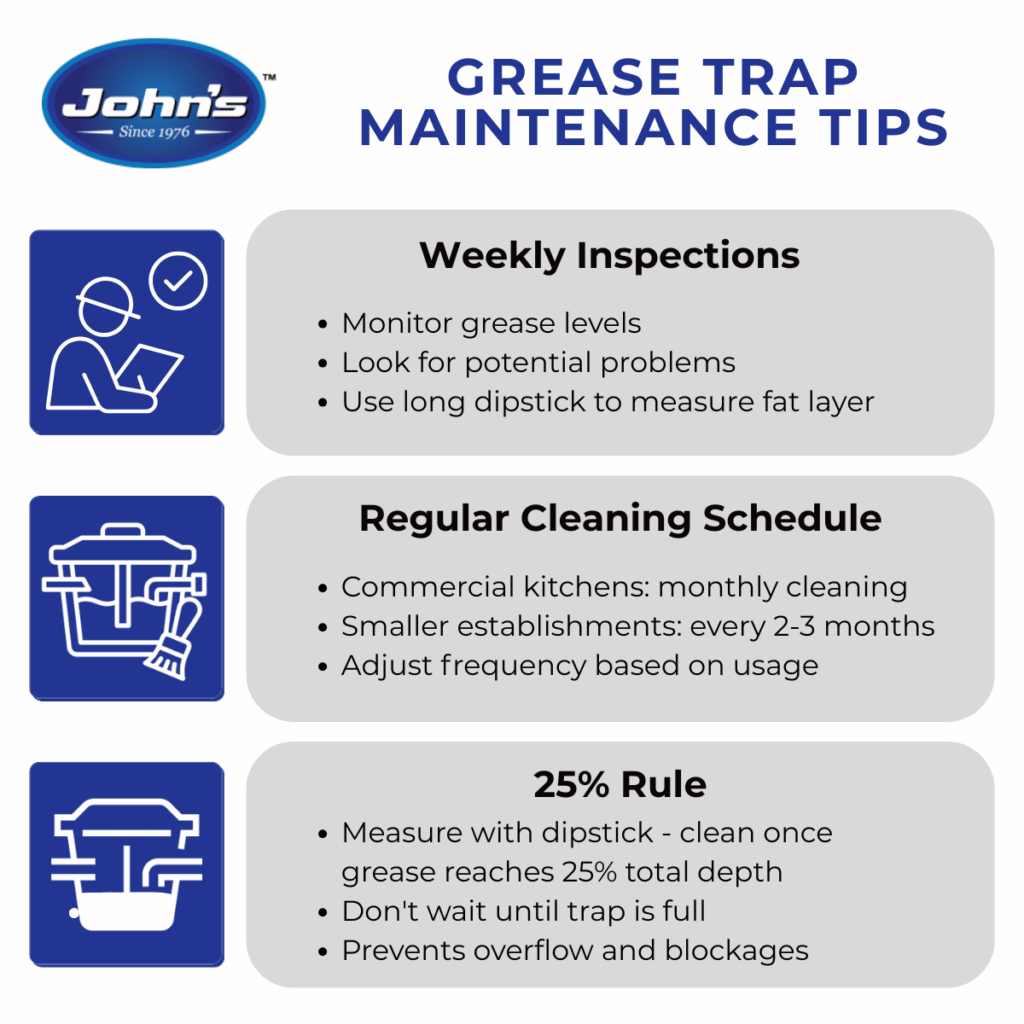
Proper grease trap maintenance follows a straightforward schedule. Inspect your commercial grease trap every week to monitor grease levels and check for potential problems. Regular cleaning should occur every 1-3 months, depending on usage – commercial kitchens need more frequent grease trap cleaning than smaller establishments. When measuring grease levels, use a long dipstick to check the fat layer thickness. The grease interceptor needs cleaning when grease occupies 25% of the total depth.
Keep detailed maintenance records including:
- Dates of all inspections
- Grease level measurements
- Cleaning service dates
- Any repairs made
- Name of maintenance personnel
A logbook helps track patterns and proves compliance with local regulations. Take photos during inspections to document the trap’s condition over time.
Warning Signs
Watch for these signals that your grease trap needs immediate attention:
- Slow drainage in the plumbing system is often the first indicator – if sinks take longer to empty, grease buildup may be restricting flow.
- Foul odors coming from drains point to trapped waste that’s starting to decompose.
- Multiple backed-up kitchen drains suggest the grease interceptor is approaching capacity.
Don’t ignore these early warnings. A completely full trap can overflow, forcing closure of food service operations. Regular maintenance prevents emergency situations and keeps your drainage system working properly. Schedule professional cleaning at the first sign of problems to avoid costly repairs.
Protect Your Business

A commercial grease trap does more than just catch fats and oils – it acts as your plumbing system’s first line of defense. By capturing grease and food waste before it enters your sewer system, these plumbing devices prevent costly repairs, avoid health code violations, and help maintain smooth business operations. Regular maintenance, including routine cleaning and inspection, keeps your grease interceptor working properly and extends its lifespan. For commercial kitchens and restaurants, proper grease trap maintenance directly impacts your bottom line by preventing emergency repairs and unexpected downtime.
Don’t wait for backups or overflows to address your grease trap functions. Professional grease trap cleaning services can assess your specific needs, establish an optimal cleaning schedule, and ensure your system meets local regulations. At John’s Sewer, we inspect your grease interceptor and develop a customized maintenance plan. With proper maintenance and regular service, your grease trap will continue protecting your plumbing investment while keeping your kitchen running smoothly. Contact us today!